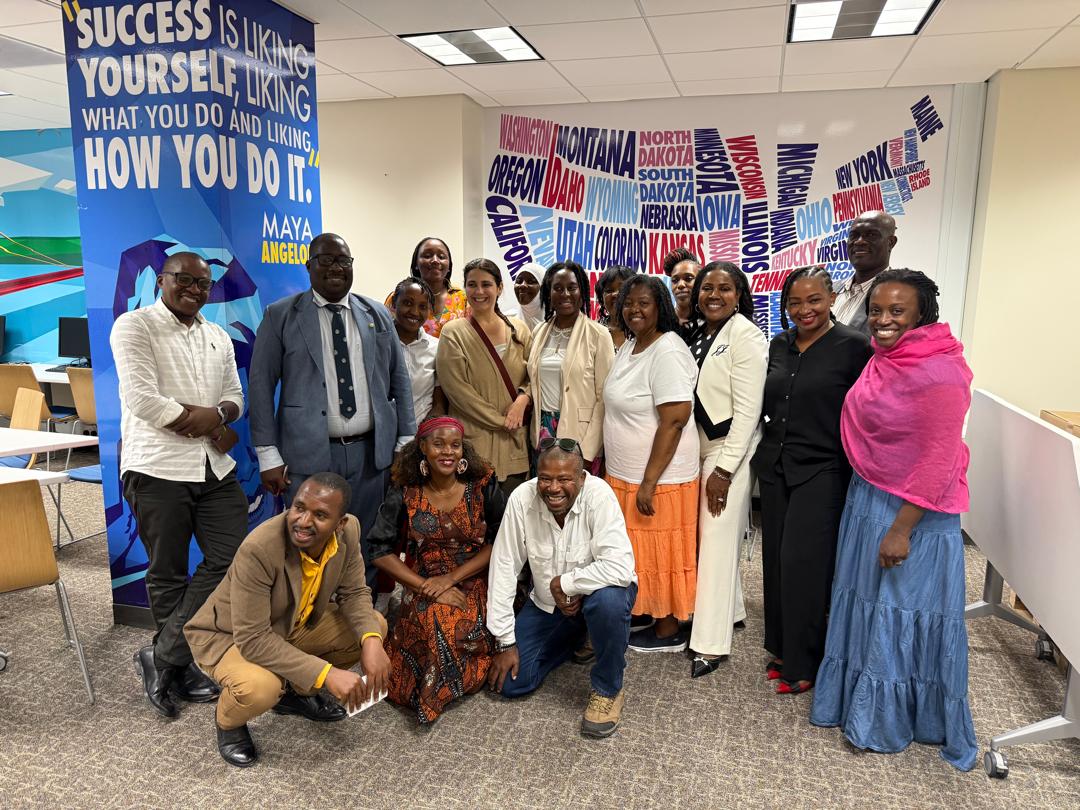
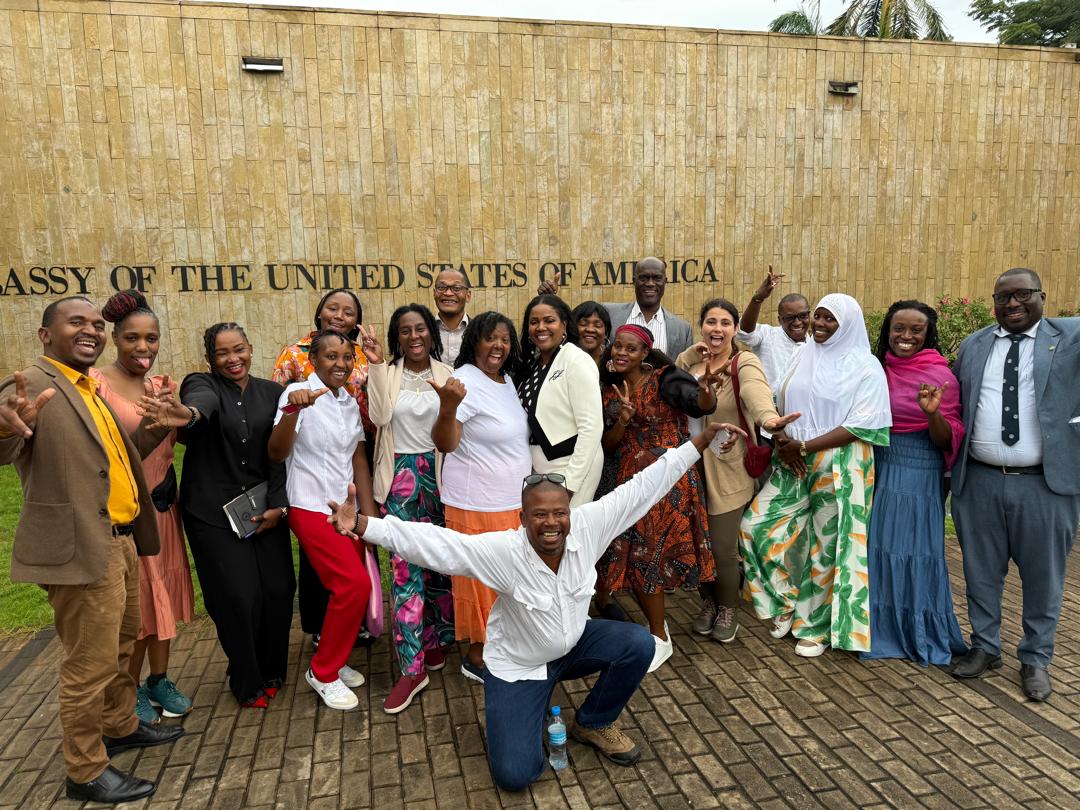
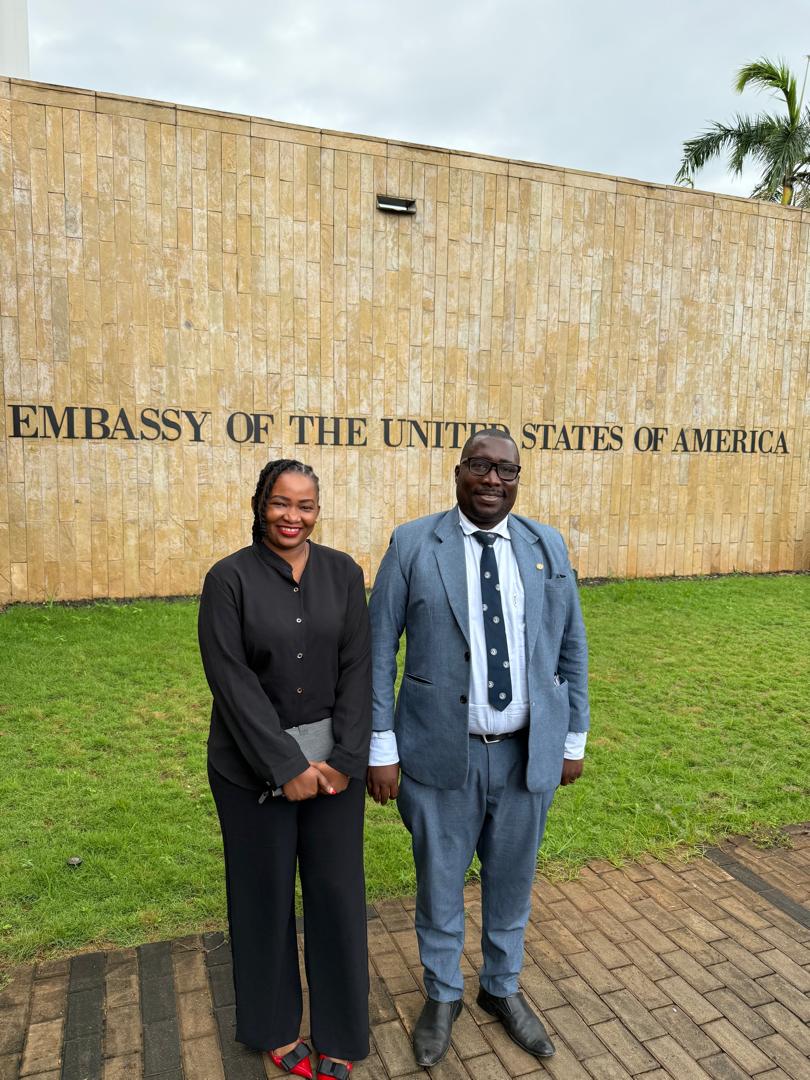
ESS Creative and Legal Foundation was honored to participate in a high-level roundtable discussion on disability inclusion in Tanzania, convened by the United States Embassy on 10 June 2026.
Representing ESS Creative and Legal Foundation, Erick Mukiza, Executive Director and Disability Inclusion Expert, joined distinguished participants including Dr. Kia Noeller Johnson, Director of the Arthur M. Blank Center for Shuttering Education and Research, Atlanta Satellite, who attended together with her colleagues from the United States, representatives of the United States Embassy, members of the Tanzania English Language Teachers Association (TELTA), and Professional Fellows Program (PFP) alumni.
The discussion created a valuable platform for mutual learning and knowledge exchange on disability inclusion, communication barriers, and practical strategies for creating more accessible environments in education, justice systems, and community engagement.
Understanding Stammering as a Disability
One of the key topics discussed was stammering, also known as stuttering, a speech disorder characterized by disruptions in the natural flow of speech. Individuals who stammer may repeat sounds, syllables, or words, prolong sounds, or experience blocks that make speaking difficult.
An important lesson from the discussion was that stammering is not connected to intelligence, truthfulness, or a person's ability to think. Rather, it is associated with neurophysiological differences in how speech is produced.
As participants learned, stammering is about how the brain works, not how the brain thinks.
This distinction is critical in professional, educational, and legal settings where individuals who stammer are often misunderstood or unfairly judged.
Reasonable Accommodations for People Who Stammer
The roundtable highlighted several practical accommodations that can help ensure meaningful participation and equal access for persons with speech disorders.
These include:
- Allowing additional time for communication. People who stammer should be given sufficient time to express themselves without pressure or unnecessary haste.
- Avoiding interruptions. It is important not to interrupt, complete sentences, or speak on behalf of a person who is stammering. Doing so can increase communication barriers and undermine their confidence.
- Listening with patience and respect. Attention should be focused on the content of what the person is saying rather than the manner in which they are speaking.
- Avoiding assumptions. A person who stammers is not necessarily nervous, anxious, or uncertain. Likewise, moments of stammering should never be interpreted as dishonesty or a lack of credibility.
Implications for Inclusive Mediation
For ESS Creative and Legal Foundation, these lessons have direct relevance to the practice of inclusive mediation.
Mediators have a responsibility to ensure that all participants can communicate effectively and participate fully in the mediation process. When working with individuals who stammer, reasonable accommodations such as allowing additional speaking time and maintaining a respectful, interruption-free environment are essential to ensuring procedural fairness and meaningful participation.
Inclusive mediation recognizes that equal treatment does not always mean identical treatment. Instead, it requires adjustments that enable every participant to communicate, be heard, and contribute on an equal basis with others.
Moving Forward
ESS Creative and Legal Foundation remains committed to advancing disability-inclusive access to justice and promoting mediation practices that respect the dignity, rights, and communication needs of all persons.
We extend our appreciation to the United States Embassy for organizing this important discussion and to Dr. Kia Noeller Johnson and fellow participants for sharing their expertise and experiences.
Through continued dialogue, learning, and collaboration, we can build a more inclusive Tanzania where communication differences are understood, respected, and accommodated in every sector of society.